

Why AI Agents Are the Next Creative Canvas
For years, the creative industry has obsessed over interface design.
How do we make it intuitive?
How do we reduce friction?
How do we get people to fall in love with a button?
But here’s an uncomfortable truth:
The interface as we know it, is disappearing...
We’re entering a post-app era, and AI agents are quietly taking the lead.

Qualcomm SXSW 2025 / Left Field Labs
From Commands to Conversations
If the last decade was about designing for screens, the next one will be about designing for intent.
AI agents don’t wait for a user to tap and swipe. They anticipate, respond, and act.
You don’t scroll through five travel apps anymore. You say:
“Book me a trip to Tokyo in mid-September, with time for ramen and art.”
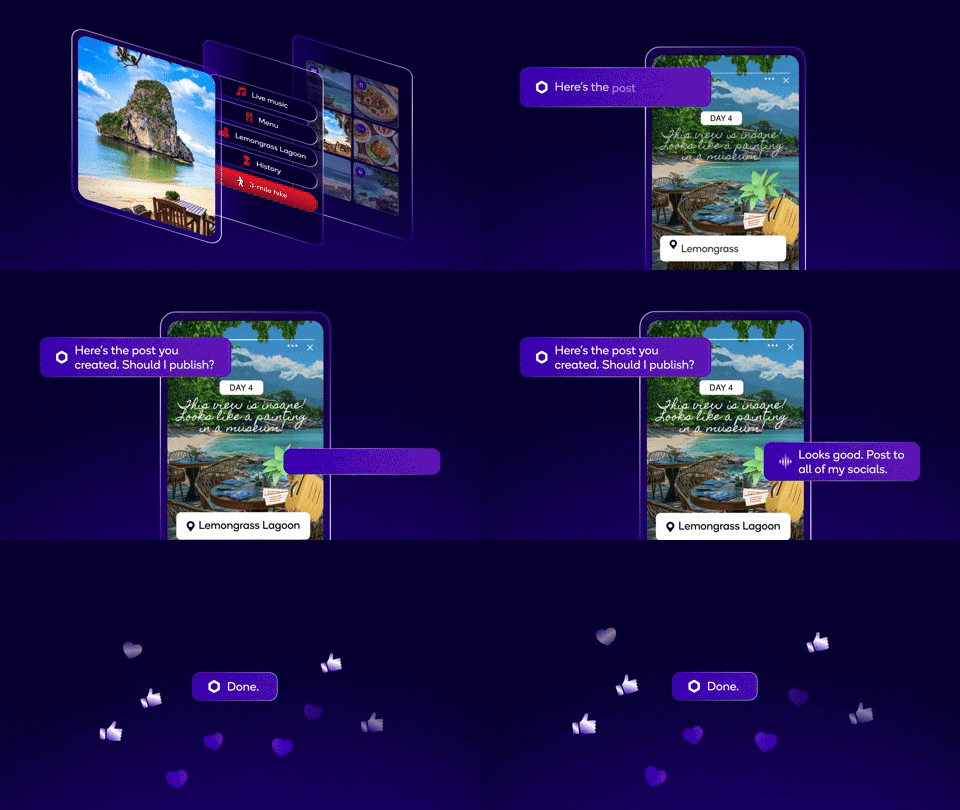
AI agents replace traditional travel user interfaces
And your agent just handles it.
This isn’t speculative. The proof points are beginning to emerge.
At COMPUTEX 2025, Qualcomm CEO Cristiano Amon answered live, unscripted audience questions—each one generated in real-time by an AI model running fully on-device (Snapdragon-powered Surface Laptop).
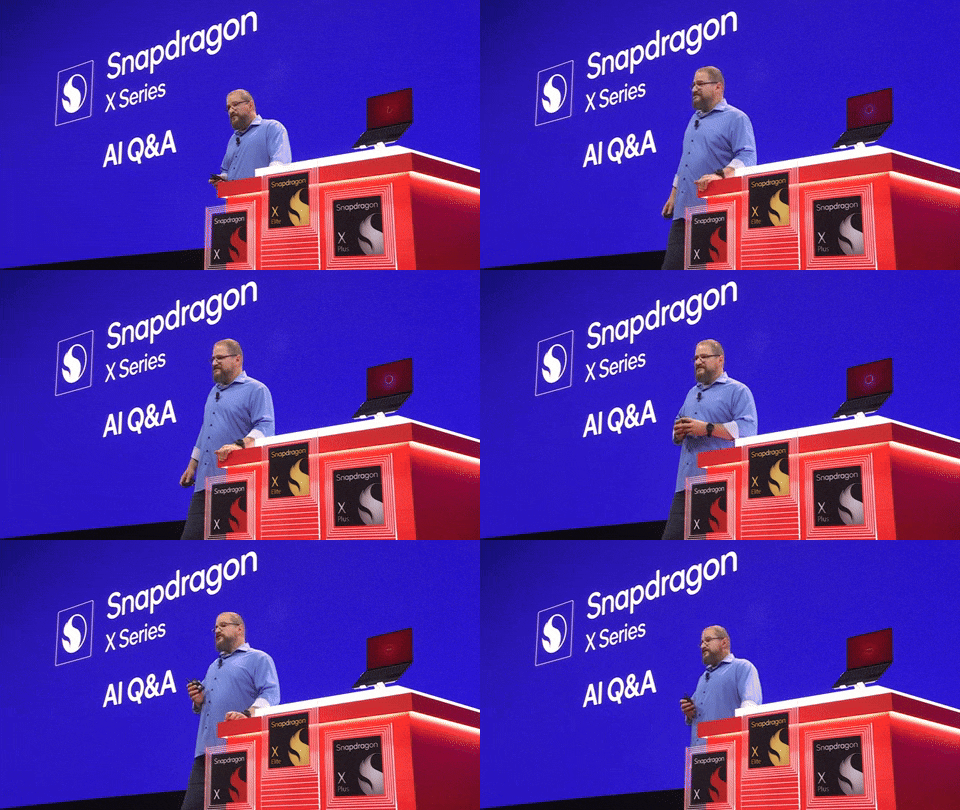
Cristiano Amon Computex 2025 / Left Field Labs
⚡ No cloud. ⚡ No safety net. ⚡ Just raw, responsive AI.
We were proud to help bring that moment to life.
But more importantly, it signaled something bigger: A shift in how people experience technology—and how they will expect to interact with it.
The Interface Is Dead. Long Live the Interface.
In recent user research, we saw a clear pattern:
People don’t want more apps. They want fewer decisions.
Every app. Every notification. Every “next step” adds to our cognitive load.
AI agents offer an alternative:
✅ A single conversation replaces a multi-tab journey. ✅ An intent becomes an outcome—no workflow gymnastics. ✅ Interactions begin to feel human again.
Interfaces aren’t vanishing—they’re becoming ambient, contextual, and conversational.
Google’s Agent2Agent Protocol: The Invisible Handshake
Recently, and somewhat quietly, Google introduced the Agent2Agent (A2A) Protocol—a potentially revolutionary set of open standards that allows AI agents from different companies to talk to each other.
Imagine this:
Your travel agent negotiating with your company’s procurement bot.
Your AI assistant syncing with your friend’s to plan an event.
We’re not just designing for people anymore.
We’re also designing for agent-to-agent choreography.
It’s not just how people experience your brand— It’s how their agents do it on their behalf.
So What Should Creatives Do?
This isn’t just a UX challenge. It’s a brand, product, and storytelling opportunity.
Here’s where I think we should focus:
1️⃣ Design for Intent, Not Interface Map user goals, not just journeys. Agents skip screens. Are you delivering immediate value?
2️⃣ Rethink Brand Voice as Agent Voice If agents become the front line of experience, What do you sound like? Is it distinct, helpful, and human?
3️⃣ Make Your Product Agent-Friendly Just like we optimized for SEO, then app stores, Now it’s about: 🔸 Clear APIs 🔸 Structured data 🔸 Conversations as triggers—not clicks
4️⃣ Build Moments of Magic, Not Just Utility Yes, agents are practical. But great brands go further— They delight, surprise, and perform. (Just like Cristiano’s live AI moment: not just tech. It was theater.)
This isn’t about adding AI to your stack. It’s about reimagining what an experience even is.
Because when the interface disappears…
Everything becomes the interface— Your voice. Your data. Your reputation. Your brand.
The future of the interface isn’t screen-deep. It’s ambient. Anticipatory. And maybe a little more alive...
Originally published in the For Breakfast newsletter on LinkedIn, June 5, 2025. Full video episodes are on YouTube at @HaveItForBreakFast.